Welcome. The Department of History at Michigan State University is a large vibrant intellectual community. The faculty members, graduate and undergraduate students, staff, alumni and friends of the Department of History are actively engaged in an enormous range of activities involving research, publishing, teaching, learning, and public outreach. It is my honor to share these with you.
Mark Lawrence KornbluhProfessor John Waller’s latest book, A Time to Dance, a Time to Die. The Extraordinary Story of the Dancing Plague of 1518 (Thriplow, Cambridge: Icon Books, 2008) , has been shortlisted by the British Society for the History of Science for the 2009 Dingle Prize for the best book in the history of science, technology, and medicine, published in English which is accessible to a wide audience of non-specialists. For more information on the prize see http://www.bshs.org.uk/prizes/dingle-prize.
Posted on 3 July 2009 | 10:42 am
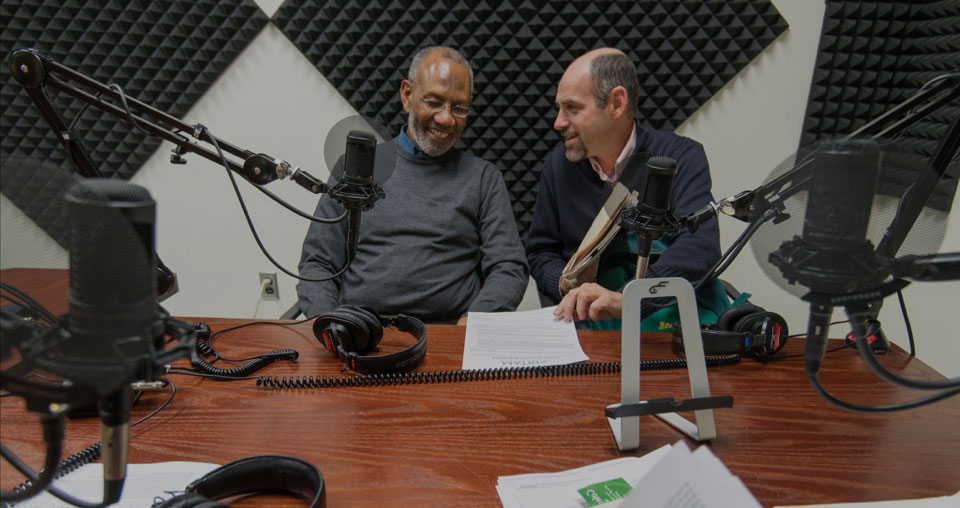
Episode 28 of Africa Past and Present — the podcast about history,culture, and politics in Africa — is now available at: http://afripod.aodl.org[1]
In this episode, historians Stephanie Beswick (Ball State University) and Jay Spaulding (Kean University) on ethnicity, slavery, and trade in Sudan. The focus is on pre-colonial times, with an emphasis on how power relationships and economic factors influenced identity formation and political conflict. The interview was conducted at the Sudan Studies Association meeting held recently in East Lansing.
Please note that we are on summer schedule. Next episode: July 15.
****** Africa Past and Present is hosted by Michigan State University historians Peter Alegi and Peter Limb. It is produced by MATRIX: The Center for Humane Arts, Letters, and Social Sciences Online: http://matrix.msu.edu
Posted on 16 June 2009 | 10:57 am
Benjamin Smith’s book, Pistoleros and Popular Movements: The Politics of State Formation in Postrevolutionary Oaxaca has been published by the University of Nebraska Press.
About the Book: The postrevolutionary reconstruction of the Mexican government did not easily or immediately reach all corners of the country. At every level, political intermediaries negotiated, resisted, appropriated, or ignored the dictates of the central government. National policy reverberated through Mexico’s local and political networks in countless different ways and resulted in a myriad of regional arrangements. It is this process of diffusion, politicking, and conflict that Benjamin T. Smith examines in Pistoleros and Popular Movements. Oaxaca’s urban social movements and the tension between federal, state, and local governments illuminate the multivalent contradictions, fragmentations, and crises of the state-building effort at the regional level. A better understanding of these local transformations yields a more realistic overall view of the national project of state building. Smith places Oaxaca within this larger framework of postrevolutionary Mexico by comparing the region to other states and linking local politics to state and national developments. Drawing on an impressive range of regional case studies, this volume is a comprehensive and engaging study of postrevolutionary Oaxaca’s role in the formation of modern Mexico.
Praise for the Book: “Benjamin Smith’s exhaustive research and expansive view allow him to place modern Oaxaca within the larger context of Mexican and world history, which is precisely what the very best regional histories do. Elegantly written, Pistoleros and Popular Movements is a veritable model of well-conceived regional history, and a truly invaluable contribution to the field.”—Timothy J. Henderson, author ofA Glorious Defeat: Mexico and its War with the United States
“Benjamin Smith’s elegant and meticulously researched history of post-revolutionary Oaxaca sheds new light on the tortuous dialectic of Mexican state formation. Eschewing pluralist, statist, and neo-Gramscian models, Smith evokes ‘the perpetual rumble of popular revolt and counter-hegemonic discourse,’ the echoes of which still resonate in Oaxaca today.”—Adrian Bantjes, author of As if Jesus Walked on Earth: Cardenismo, Sonora, and the Mexican Revolution
Posted on 15 June 2009 | 4:55 pm
Dr. Peter Alegi has been appointed a visiting Fulbright Scholar at the University of KwaZulu-Natal, Pietermaritzburg, in South Africa for the calendar year 2010. Dr. Alegi’s project is to explore “Sport and Leisure: Colonial and Postcolonial Transformations.” As part of his project,” Alegi will teach two newly developed history courses:
1. “Global Soccerscapes: Business, Power, and Culture:” This course explores how and why the global history of soccer influenced, and was influenced by, various factors, including cultural values, economic interests, and power relationships. Case studies from Brazil, South Africa, the Netherlands, and England bring out regional differences and invite comparisons across time and space. The course helps understand how race, gender, media, and economics made the world of football we see today.
2. “Sport in South Africa, Past and Present: Race, Class, Gender, and Nation:” This course uses sport as a prism through which to study South African history since the late nineteenth century. It explores how and why South Africa underwent a remarkable transformation from a pariah in world sport to the first African host of a World Cup in 2010. Through studies of rugby, cricket, and soccer, as well as other sports, the course connects South Africans? intense passion for sport to broader experiences with industrialization, urbanization, racism and segregation, the quest for liberation, nationhood, and the impact of globalization.
These courses illustrate how African men and women cannot be written out of history. Studies of sport and leisure humanize the lives of ordinary (and not so ordinary!) people in evocative and powerful ways. They cast new light on the emotional dimensions of history and broaden our understanding of how oppressed people jostled for power and pursued pleasure under the punitive and unforgiving conditions of colonialism, segregation, and apartheid.
Alegi’s courses are aimed at undergraduates and graduate students seeking to inform themselves ahead of the 2010 Soccer World Cup in South Africa. As a Fulbright scholar, Alegi will assist with the internationalization of the curriculum at UKZN and develop new ways for local students to interact with online media, as well as integrate digital resources into their own projects. During his year in South Africa (January-December), Alegi intends to work on joint projects with local faculty and strengthen MSU’s strategic parternship with UKZN.
Posted on 27 May 2009 | 12:23 pm
The Alpha Phi chapter of Phi Alpha Theta at Michigan State University was pleased to host the 2009 regional conference of the national history honorary for its members from Michigan and Wisconsin. It was held on March 28 at the Kellogg Center. In addition to students from MSU, students from Oakland University, Alma College and Western Michigan University also participated in the day long conference by presenting their papers. The topics ranged from the catholic reforms of Henry VIII, to American policy with Israel, to rock and roll as a reflection of teenage protest in the 1960s. Faculty members of MSU served as session judges and included Professors William Schoenl, Denise Demetrious, Emily Tabuteau, Edward Jocque, Michael Stamm and Matthew Pauly. Members of the Alpha Phi chapter chaired the sessions. They were Ryan Etzcorn, Jeffrey Richards, Sam Warren, Justin Benson and Elisabeth Slocum. Two students from MSU, Eric Baldwin and Aaron Myers were among those winning awards for outstanding papers.
The plenary speaker for the conference was Dr. Thomas Summerhill, the Associate Dean for Academic and Student Affairs and the Director for Integrative Studies in Social Science at Michigan State University. He spoke on The Historical Journey of Discovery: Learning, Researching, and Teaching History. His talk was well received by the audience.
At the luncheon, the chapter advisor, Professor Jane Vieth, introduced the newly elected members of the society and presented them with their certificates of membership. She also thanked Elisabeth Slocum, the chapter president and vice president Jeff Richards for their hard work in putting the conference together. Professor Vieth also announced the officers for next years. They are Justin Benson, the president elect and Ashley Conrad, the incoming vice president. Professor Vieth paid special tributes to Belinda Bombrisk and Rhonda Bucholtz for their assistance in organizing the conference as well. The chapter members thank all those who contributed to making the conference so successful.
Posted on 12 May 2009 | 5:06 pm
Episode 26 of Africa Past and Present — the podcast about history, culture, and politics in Africa — is now available at: http://afripod.aodl.org
This episode is devoted to the 2009 elections in South Africa. Dr.Sean Jacobs (University of Michigan) and Dr. Hlonipha Mokoena (Columbia University) analyze the ANC victory; Jacob Zuma an Zulu nationalism; the opposition’s weak showing nationally; Western Cape exceptionalism; and local and international media coverage.
Africa Past and Present is hosted by Michigan State University historians Peter Alegi and Peter Limb. It is produced by Matrix — the Center for Humane Arts, Letters, and Social Sciences Online: http://matrix.msu.edu
Posted on 11 May 2009 | 10:20 am
Mary Clingerman has successfully defended her dissertation, “On Intimate and Friendly Terms”: A Regional Comparison of Gender and Space in Antebellum American Higher Education.” Mary’s dissertation director was Lisa Fine, and the members of her committee were Maureen Flanagan, Michael Sedlak, and Robert Bonner.
Posted on 9 May 2009 | 11:27 am
Ryan Pettengill has successfully defended his dissertation “Communists and Community: Unionism and the Rise and Fall of Community Activism in Detroit, 1932-1968.” Dr. Lisa Fine and Mark Kornbluh co-chaired his committee which included Dr. Dionicio Valdes and Dr. David Bailey.
Posted on 8 May 2009 | 2:27 pm
Stuart Willis successfully defended his dissertation: Left to themselves, the Cherokee would become a prosperous, independent commonwealth, and would never sell their lands: Cherokees, Slaves and Moravians at Springplace Mission, Georgia, 1799-1838. Susan Sleeper-Smith was his graduate advisor and Walter Hawthorne, Gordon Stuart, and Laurent DuBois were members of the committee.
Posted on 2 May 2009 | 10:34 am
Jeanine Mazak-Kahn has successfully defended her dissertation, Birthpace of Aluminum, Cradle of Crime: Spheres of Influence in the Deindustrialization of New Kensington, Pennsylvania, 1930-1970. Her Ph.D. committee was composed of Mark Kornbluh, Kirsten Fermaglich, Christine Daniels, and Dean Rehberger. In the Fall, Dr. Kahn will be a tenure-stream Assistant Professor at the Indiana University of Pennsylvania. She will be teaching in IUP’s graduate program in public history.
Posted on 29 April 2009 | 10:16 am