African Online Digital Library
The Internet and Women's Democratic Organizing
Partnership to Cut Hunger and Poverty in Africa
MATRIX and African Studies Center at Michigan State University hosted a ribbon cutting Friday May 2, 2008 at the Kellogg Hotel & Conference Center in honor of their recently launched websites Overcoming Apartheid and Community Video Education Trust.
Among the guests was MSU Trustee, Melanie Foster, who spoke on MSU's dual missions of African studies and digital humanities. Trustee Foster described the work as "...interdisciplinary research, scholarship, and outreach at its best."
Yusef Omar, previous South African Consul General in Chicago, spoke of the importance or recording memories and teaching about the struggle against apartheid. Omar is interviewed on the Overcoming Apartheid website.
Both websites contribute to MATRIX and African Studies Center engagement of preserving and providing access to materials about the struggle for freedom and democracy in Africa. Please browse these sites at http://overcomingapartheid.msu.edu and http://cvet.org.za
Please visit http://www.overcomingapartheid.msu.edu/promo.php to view the Overcoming Apartheid promotional video.
Included in photo (from left to right; click on photo to enlarge): Jeffrey Riedinger, Dean of MSU's International Studies and Programs; Satish Udpa, Dean of MSU's College of Engineering; Melanie Foster, MSU Trustee; Yusef Omar, former South African Counsul General in Chicago, IL; Mark Kornbluh, MATRIX Director; and David Wiley, MSU's African Studies Center Director
MATRIX received the Excellence Award in Interdisciplinary Scholarship from the Michigan State University Chapter of The Honor Society of Phi Kappa Phi at their annual initiation ceremony and banquet held at the Kellogg Center on Saturday April 19, 2008. The award was for MATRIX's contribution to a variety of disciplines including research in digital archiving with projects that have a significant societal impact. Please see the Overcoming Apartheid and American Black Journal for examples of this work.
Since 1927, the MSU Chapter of The Honor Society of Phi Kappa Phi has been working to promote the pursuit of excellence in all fields of higher education. For more information, please visit their website at http://pkp.msu.edu/
Included in photo (from left to right): Wayne Dyksen, MATRIX Associate Director; Burton A. Bargerstock, The Honor Society of Phi Kappa Phi President; Mark Kornbluh, MATRIX Director
This digital archive of unique, publicly accessible videos was taken in South Africa in the late 1980s and early 1990s. Footage available on the CVET website documents anti-apartheid demonstrations, speeches, mass funerals, celebrations, and interviews with activists. The videos capture the activism of trade unions, students and political organizations, including the activities of the United Democratic Front.
Overcoming Apartheid South Africa: Overcoming Apartheid, Building Democracy presents first-hand accounts of this important political movement. Interviews with South African activists, raw video footage documenting mass resistance and police repression, historical documents, rare photographs, and original narratives tell this remarkable story.
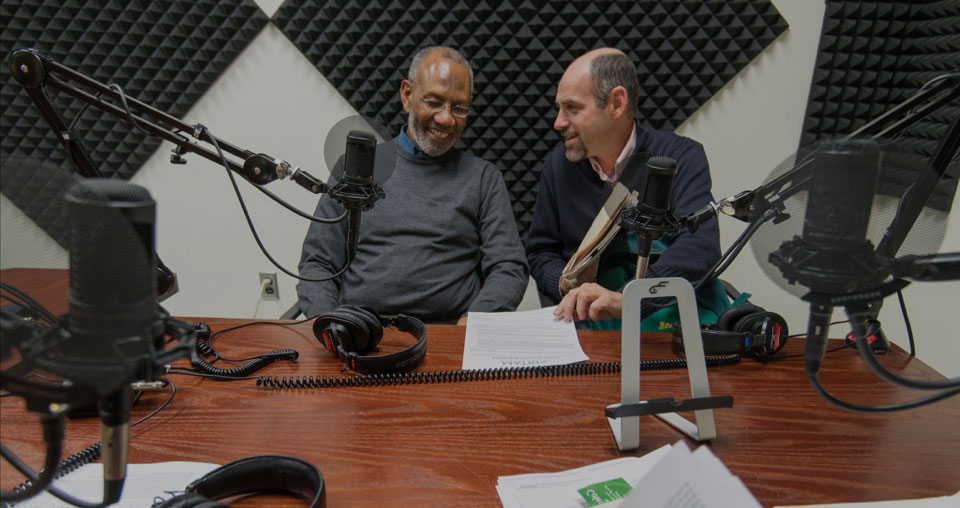
Africa Past & Present is a podcast about history, culture, and politics in Africa and the diaspora. The show highlights interesting and significant people, ideas, and discussions in African Studies from a wide range of disciplines and perspectives. Their mission is to broaden the availability and accessibility of cutting-edge knowledge relating to African experiences and to do so in a down-to-earth and informed manner. Shows feature interviews with eminent scholars and persons, commentary on current events, and key debates for Africans at home and abroad.
Learn from Bishop Desmond Tutu about the effects of apartheid. Understand the African-American religious experience. Answer the question of "what makes someone riot?" Coleman Young, former mayor of Detroit, Harry Edwards organizer of the 1968 Olympic protest, and Alex Haley, author of Roots (1976), are some of the featured interviews in the historic American Black Journal (ABJ), WTVS Detroit Public Television's award-winning chronicle of black community, politics, culture, and life. Originally titled Colored People's Time, ABJ first aired in 1968 as a televised public forum for black Americans during an historic moment of racial turmoil across the nation. You can explore themes such as community leadership; music, including jazz, Motown, gospel, hip-hop, and techno; and life in the Motor City.
This multimedia exhibit is a collaboration between WTVS Detroit Public Television (DPTV) and MATRIX at Michigan State University. MATRIX uses multimedia to both preserve and provide access to the humanities.
Michael P. Fegan II, the Chief Technical Officer at MATRIX died Saturday September 8, 2007 at age 37, one week after a massive stroke.
Mike leaves his wife Mandy and their three children, ages 12, 6, and two months. A memorial fund is being established for the education of his and Mandy's three children.
Mike developed some of MATRIX's most successful online projects and was the key architect of the MATRIX online digital repository Project Builder and of MediaMatrix, an online application for segmenting and annotating streaming media. He has done training and development across the United States, Africa, and Scotland on the digitization and delivery of online multimedia objects. He had been in this position at MATRIX since 1999.
Mike was key to a number of the Africa projects that MATRIX and the African Studies Center shared, including the Africa Internet Connectivity Project, the training workshops for the Internet Outreach to Disadvantaged Communities project in Durban (South Africa), the database programming for the African Media Database and the South Africa Film and Video Project, The Internet and Women's Democratic Organizing, the African segments of the National Gallery of the Spoken Word, and the online aspects of the South AfricanNational Cultural Heritage Project.
He also had designed, programmed, and/or created many other MSU online resources, including the website of the MSU Writing Center, the Lilly Seminar, MSU Humanities Computing Certificate Program, the Center for Great Lakes Culture, the Michigan Humanities Council, MSU Department of History, Conference site for the Martin Luther King, Jr. Symposium, the Civics Online project, the Humanities Computing Consulting, and the MSU Department of Art. He also authored articles and taught both undergraduate courses and graduate seminars at MSU on web design, digital literacy, Internet research, and digital pedagogy.
Mike had his B.A. in English and History from MSU (1993) with a Secondary Education Certificate, an MSU MA in Arts and Letters (1996), and was a Ph.D. candidate in American Studies with an Emphasis in Media Theory.
We all are diminished so much by the loss of this vital, intelligent, productive, and caring person.
Fegan Children's Education Fund
The State Bank c/o Tom Hufton
P.O. Box 725 Fenton, Mi 48430
The creative partnership between computer science, the humanities, and the social sciences-the core of what we now call "humanities technology"—is the cornerstone of the digital revolution. Knowledge is useless without meaning, and meaning is the essence of the humanities and social sciences. Humanities technology emerged in the 1960s as an interdisciplinary effort by humanists and social scientists to harness the power of the computer for their studies. The early pioneers used computers for textual and quantitative analysis, to provide new insights and new ways to teach. But it is with the advent of the Internet and the ensuing digital revolution of the last decade, which was initiated by the development of the MOSAIC web browser at the National Center for Supercomputing Applications (NCSA) at the University of Illinois, that humanities, as well as social science, technology has truly come into its own. In a world where information can be reduced into bits and bytes and communicated instantaneously, humanities and social science technology has rapidly emerged as a necessary and fundamentally interdisciplinary method of archiving, analyzing, and interpreting human activity and the human record. Humanities technology can, for the first time in world history, securely preserve and provide broad democratic access to the documents, images, languages, sound, and film that constitute the human record and facilitate its understanding. Social Science technology can now allow us to analyze, model, and even predict human social behavior on a scale that was unimaginable just a few years before.
MATRIX has released a new version of its online, segmentation and annotation tool called MediaMatrix. This release has an interface that is skin-able, allowing users to choose their own look for MediaMatrix. It also has two new presentation layers: one that allows users to embed the digital
media they collect and segment into a web page, and the other that allows users to create time-based, multimedia presentations for the web. Sign up for an account to begin using it today!
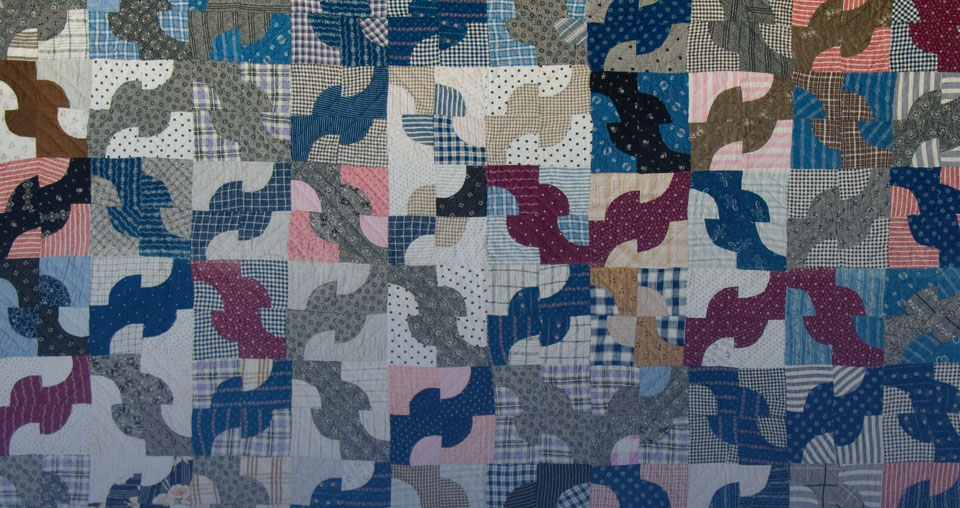
Quilts matter. They are art. They are formal, funny and just as often as they represent the past, they express hope for the future. The Quilt Index provides access to these quintessentially American objects on a large scale and in a broad national context. This online research and display interface contains documentation on American quilts and quilt-making and features quilt patterns ranging from traditional blocks to original designs using cigar box flags or depicting Fredrick Douglass.
With close to 2000 images of quilts, the Index can be searched by collection, pattern, themes, time frame, techniques, and many other characteristics. The collection spans the 19th and 20th century and draws upon collections from a coalition of libraries, quilting groups, and repositories in the United States. The Index demonstrates the results of MATRIX's collaborative partnerships that apply networking technologies to the needs of specific fields of interest in cultural heritage and the humanities.
ExplorePAHistory is MATRIX's latest implementation of its innovative content-management system that permits designers and users to create new galleries of stored digital objects. Filled with a variety of interactive images, documents, audiovisuals, and lesson plans, ExplorePAHistory is a powerful resource for all Pennsylvania students, teachers, and historians.
Ever since the days of Homer, humans have regarded speech as a distinctive and significant trait. The Spoken Word unlocks the power of historical speech from long-lost, unique and well-known audio recordings in an effort to transform undergraduate learning and teaching. The project integrates media resources, such as digital audio repositories, with undergraduate courses in history and political science to build processes for learning and expand the way students and teachers understand knowledge, knowledge resources, and their complementary roles in higher education.
Michigan State University, in collaboration with Northwestern University, the National Archives and Records Administration (NARA), Scotland's Glasgow Caledonian University, and the BBC Information and Archives, will develop and implement this vision. Visit our project headquarters for information, samples, and more...
David McCullough defines history, Joyce Carol Oates discusses the genesis of art, Kurt Vonnegut portrays the "American mindset," and Tom Wolfe illustrates "New Journalism" in the audio recordings at the official online archive of the John W. and Joan Eadie Celebrity Lecture Series. These celebrity lectures are just a few of the 31 scholars, critics, novelists, poets, and creative artists featured in the Celebrity Lecture Series, a ten year sequence of colloquia at Michigan State University.
"The College of Arts & Letters initially brought these speakers to the campus, and we are very glad to see them connect to the world" notes Patrick McConeghy, Acting College Dean. John Eadie, former Arts & Letters dean and impresario for the series, agrees. "The original purpose was to bring great minds to campus to enlighten and instruct students, faculty, and our fellow citizens in East Lansing. It is appropriate that the series now can reach a limitless audience and become useful in the classroom."
To promote use in the classroom and learning, the lectures are divided by topics focusing on issues including "American Culture and Society," "Family," and "The Significance of Art." These topics aid users by presenting complex issues from the scholars' first person perspective.
Mark Kornbluh, Director of MATRIX, emphasizes the significance of new media in making this happen. "MATRIX's knowledge of audio technology and digital archiving methods allows us to rethink the arts and humanities as we preserve and broadcast them," he observes. The Celebrity Lecture Series uses database technology built from open source software.